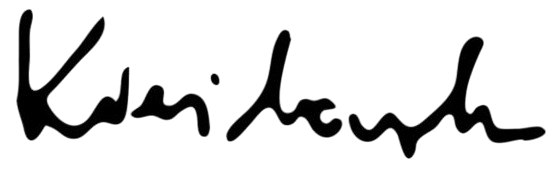
“Blind Chance”, directed by Krzysztof Kieślowski in 1981 (and released to audiences only in 1987), is one of the director’s most radical and at the same time most personal works. It is a film in which, for the first time with such consistency, cinema becomes a tool for examining human destiny – not through the description of events, but through the analysis of choices, their consequences, and the forces over which an individual has no full control.
Three Variants of One Life
The film’s structure is built on a simple, almost banal event: the pursuit of a departing train. Whether Witek Długosz manages to jump onto the carriage determines three entirely different versions of his biography. The same protagonist is shown as a Party activist, as a member of the opposition, and as a man avoiding political involvement.
Kieślowski did not treat this construction as a formal experiment. As he himself emphasized:
“This is not a description of the external world, but rather of the internal world. A description of certain forces that tear at human fate, that push a person in one direction or another.”
The three variants do not cancel one another out; instead, they complement each other – showing that human identity is not fixed once and for all, but is shaped in relation to circumstances and chance events.
Chance Does Not Abolish Responsibility
Although the film’s title suggests the dominance of randomness, Blind Chance is not a story about the individual’s helplessness. On the contrary, in each version of his life Witek makes decisions and bears their consequences. Kieślowski stressed that his protagonist is not an ideological figure, but a person striving to maintain basic decency:
“Witek behaves decently in every situation. Even when he joins the Party, he behaves decently. And at the moment when he sees that he should behave like a swine, he rebels.”
This decency does not protect the protagonist from suffering or from a tragic ending. The film consistently presents the tension between moral intention and the outcome of action – one of the key issues in the director’s later work.
Historical Context and Censorship
Blind Chance was made during a period of growing social and political tension in Poland, which directly influenced its fate. The authorities deemed the film dangerous and it was shelved by the censors. Only six years later was it allowed to be shown publicly.
At the same time, as scholars point out, the historical context does not exhaust the film’s meaning. Kieślowski himself distanced himself from purely political interpretations, emphasizing that he was primarily interested in the individual entangled in reality, rather than in reality itself:
“Politics interests me only insofar as it affects the life of a specific person. The rest is secondary.”
For this reason, Blind Chance retains its universality and can be read as a story about the individual’s relationship with any system that imposes roles and choices.
Form as a Carrier of Meaning
The film’s formal layer is strictly subordinated to its central idea. The repetition of scenes, motifs, and characters, the clearly marked role of Wojciech Kilar’s music, and the quasi-musical composition of the whole make Blind Chance function as a cyclical structure – returning to its starting point, yet each time revealing a different meaning.
Kieślowski attached great importance to detail, which can set an entire chain of events in motion:
“Life consists of details. One word, one gesture, one small thing can cause everything to unfold differently.”
This principle organizes not only the film’s narrative, but also its philosophical message.
Death as a Shared Horizon
The plane crash that closes the film does not constitute moral judgment or punishment. Death is a shared experience for all variants of life – the only difference lies in the moment and circumstances. As the director himself said:
“The closest to me is the third solution – the one in which the plane crashes – because death will be our share anyway. It makes no difference whether it happens on a plane or in bed.”
In this sense, Blind Chance does not resolve the dispute between fate and freedom, but shows their coexistence. A person acts, chooses, rebels – but always in the shadow of inevitability.
The Film’s Significance
Blind Chance is a threshold work in Krzysztof Kieślowski’s oeuvre: situated between social and metaphysical cinema, between the observation of reality and reflection on its hidden order. It is the film in which the conviction appears most clearly that cinema should not provide answers, but confront the viewer with questions for which there are no simple solutions.
The Krzysztof Kieślowski Archive presents Blind Chance as one of the key works in the director’s body of work – a film that remains, to this day, a relevant and moving study of freedom, responsibility, and human destiny.